The Psychology Book: From Shamanism to Cutting-Edge Neuroscience, 250 Milestones in the History of Psychology by Wade E. Pickren
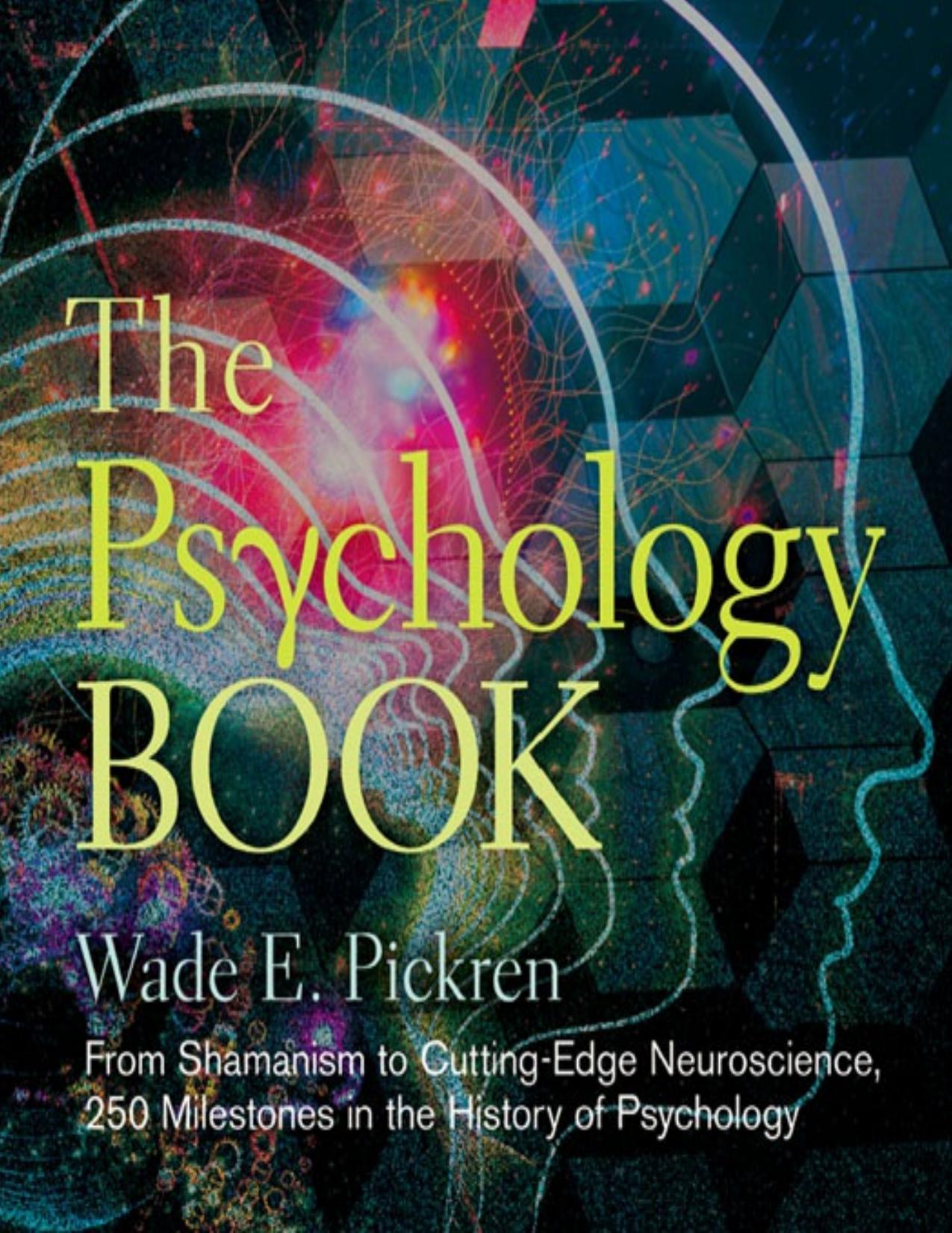
Author:Wade E. Pickren
Language: eng
Format: epub, pdf
“Leading Breeds of Dogs,” illustration by F. E. Wright, from Webster’s New Illustrated Dictionary, 1911. Geneticist Paul Scott is chiefly known for his study of the interplay between genetics and the environment in five breeds of dogs, described in his classic Genetics and the Social Behavior of the Dog (1965).
Cybernetics
1943
Norbert Wiener (1894–1964)
Mathematician Norbert Wiener coined the term cybernetics to describe the study of self-regulating systems. During World War II, Wiener was working on a military project on the guidance and control of aircraft fire when he came to the conclusion that to solve the self-correcting tracking problem, he would need to employ the notion of feedback, both in the plane and in the human gunner, as an integrated system. In 1943, his scholarly paper “Behavior, Purpose, and Teleology” brought together ideas from physiology, behavioral psychology, and engineering to describe a cybernetic organism, or one that was both man and machine. This paper became the manifesto for cybernetics and led to a series of annual conferences that were crucial for the postwar development of what is now referred to as cognitive science.
From the beginning, cybernetics was an interdisciplinary research area in which psychologists, biologists, mathematicians, engineers, and others studied the interaction of brain and machine. Three concepts are crucial in cybernetic theory: feedback, information, and purpose. Feedback relies on an information flow about the organism or machine in order to regulate the activity of the organism or machine. Self-regulating systems have a purpose or goal, such as maintaining a constant temperature.
An event that took place at the Macy conference of 1952 illustrates these concepts. Information theorist Claude Shannon brought along a mechanical maze-running rat equipped with an electrical contact “finger,” which it used to detect the walls of a maze made up of twenty-five squares. Using feedback from these contacts and programming that allowed it to avoid blind alleys, the rat successfully navigated the maze.
The ways these ideas were deployed in combination with information theory to encompass both human systems (biological and social) and machine systems led to a period of innovative scientific discovery. With parallel developments in computer science and neuroscience, the new field of cognitive science was born, which has gradually changed the field of psychology.
SEE ALSO Turing Machine (1937), Logic Theorist (1956), Center for Cognitive Studies (1960)
Download
The Psychology Book: From Shamanism to Cutting-Edge Neuroscience, 250 Milestones in the History of Psychology by Wade E. Pickren.epub
The Psychology Book: From Shamanism to Cutting-Edge Neuroscience, 250 Milestones in the History of Psychology by Wade E. Pickren.pdf
This site does not store any files on its server. We only index and link to content provided by other sites. Please contact the content providers to delete copyright contents if any and email us, we'll remove relevant links or contents immediately.
| Administration & Medicine Economics | Allied Health Professions |
| Basic Sciences | Dentistry |
| History | Medical Informatics |
| Medicine | Nursing |
| Pharmacology | Psychology |
| Research | Veterinary Medicine |
The Art of Thinking Clearly by Rolf Dobelli(10719)
The 5 Love Languages: The Secret to Love That Lasts by Gary Chapman(10011)
Mindhunter: Inside the FBI's Elite Serial Crime Unit by John E. Douglas & Mark Olshaker(9523)
Becoming Supernatural by Dr. Joe Dispenza(8368)
Nudge - Improving Decisions about Health, Wealth, and Happiness by Thaler Sunstein(7853)
The Road Less Traveled by M. Scott Peck(7730)
Mastermind: How to Think Like Sherlock Holmes by Maria Konnikova(7547)
Enlightenment Now: The Case for Reason, Science, Humanism, and Progress by Steven Pinker(7425)
Win Bigly by Scott Adams(7346)
The Way of Zen by Alan W. Watts(6732)
Factfulness: Ten Reasons We're Wrong About the World – and Why Things Are Better Than You Think by Hans Rosling(4858)
The State of Affairs by Esther Perel(4822)
Gerald's Game by Stephen King(4799)
Man's Search for Meaning by Viktor Frankl(4727)
The Confidence Code by Katty Kay(4374)
Thinking in Bets by Annie Duke(4358)
The Healing Self by Deepak Chopra(3734)
Hidden Persuasion: 33 psychological influence techniques in advertising by Marc Andrews & Matthijs van Leeuwen & Rick van Baaren(3632)
Liar's Poker by Michael Lewis(3576)
